
Context + Governance: The Missing Layers in AI-Driven SDLC
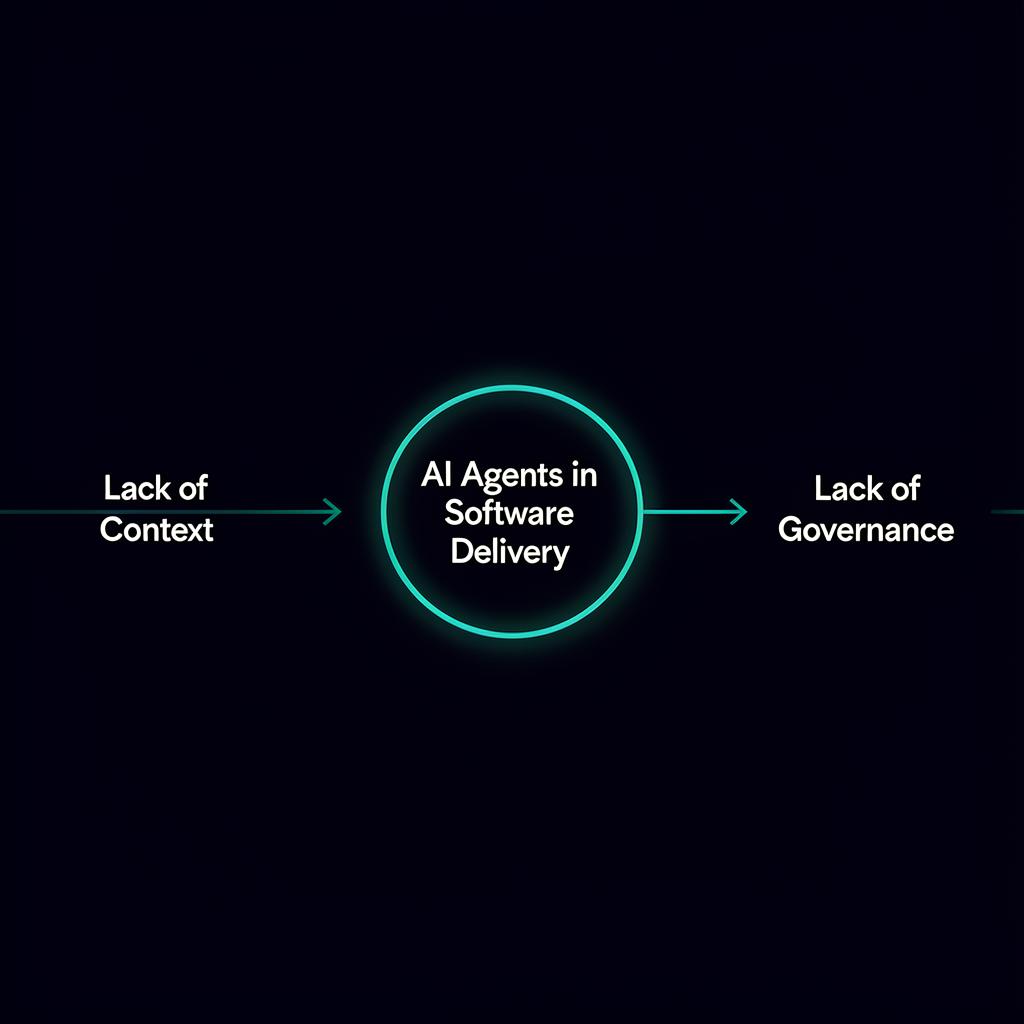
AI-driven SDLC breaks if you optimize only one side. You need a Context Layer to tell AI what is true, and a Governance Layer to ensure what's produced is acceptable.
Most teams think improving AI in the SDLC is about better prompts or better models. It's not.
AI-driven software delivery only works when you solve both sides of the system: context (input) and governance (output).
Context Layer → tells AI what's true
Without a structured enterprise context (requirements, APIs, patterns, constraints), AI fills the gaps with assumptions. This results in fluent code, but many times with the wrong intent. AI agents are stateless machines, and they need the context and temporal understanding to make them more accurate and spend less time iterating with expensive tokens.
Governance Layer → ensures what's produced is acceptable
Even with good context, AI is probabilistic. It will still produce edge-case errors, policy violations, or incomplete logic. Without the right guardrails, various stages of the SDLC process will create relevant code but unsafe to ship.
Governance enforces: - Policies — security, compliance, architecture - Contract validation across services and APIs - Test coverage and quality gates
It blocks unsafe changes, non-compliant patterns, and partial implementations.
Most teams only solve one side
- Context without governance → informed but risky
- Governance without context → controlled but slow
We need both. Context reduces the probability of being wrong. Governance reduces the impact of being wrong. Together, AI moves from plausible output to production-grade, trustworthy systems.