
The Hidden Cost of Ignoring SDLC Signals
Ignoring SDLC signals rarely causes immediate failure. The cost shows up gradually through rising rework, delayed releases, and growing uncertainty.
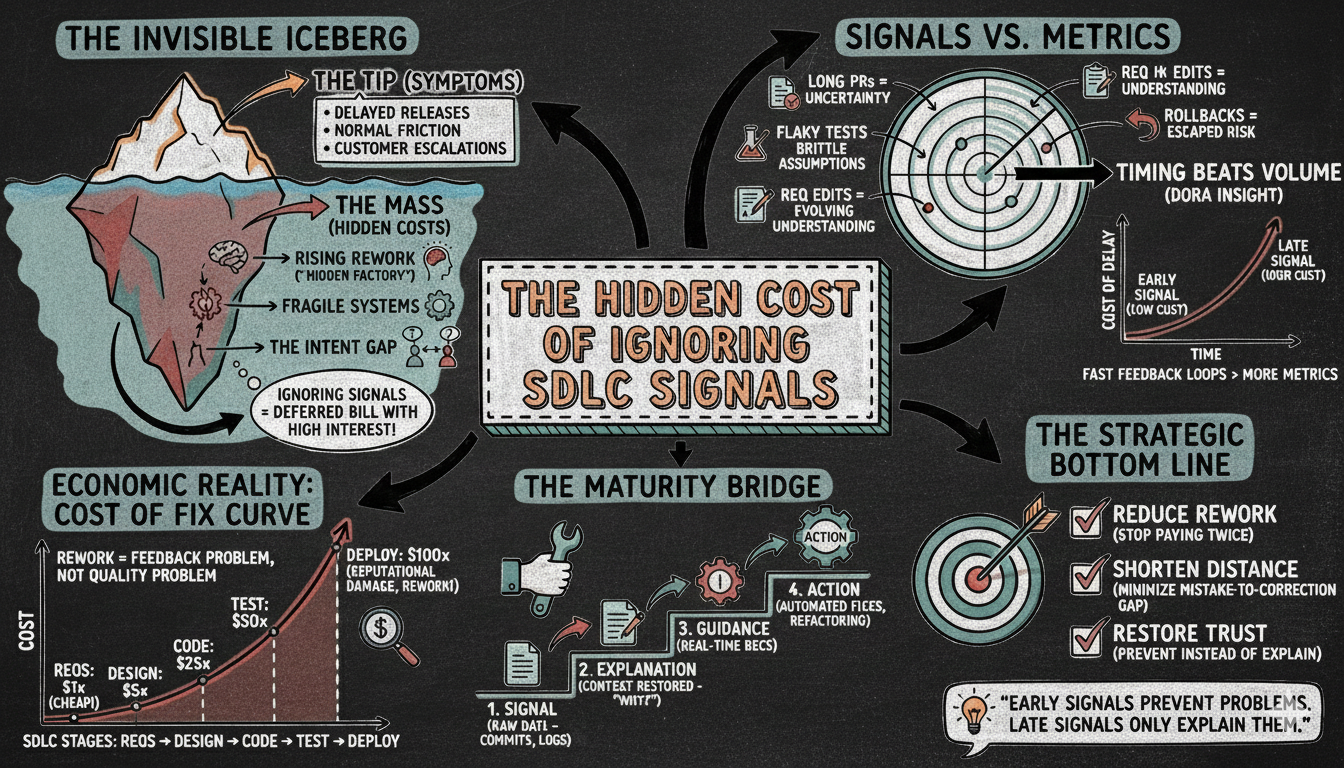
Every modern software organization generates signals continuously — code commits, pull requests, test failures, build logs, requirement edits, deployment events, and support tickets. These signals exist whether teams look at them or not.
Most teams do not ignore them deliberately. They encounter them late. By then, decisions are locked in, code has shipped, and rework has already begun.
Rework Is a Feedback Failure
Defect resolution cost rises sharply the later an issue is discovered in the SDLC. Rework accumulates when signals exist but are not acted upon.
Timing Beats Volume
High-performing teams are defined by fast feedback and early correction, not by the number of metrics they track. Late signals explain problems. Early signals prevent them.
From Signals to Understanding
Outcomes improve when systems explain what is happening. Clear explanations restore context, reduce ambiguity, and make decisions easier — and contextual, in-the-moment guidance helps teams correct course before issues harden into defects.