
The SDLC Context Graph
Software delivery rarely fails because teams lack tools. It fails because context is fragmented across plans, tickets, chats, and code.
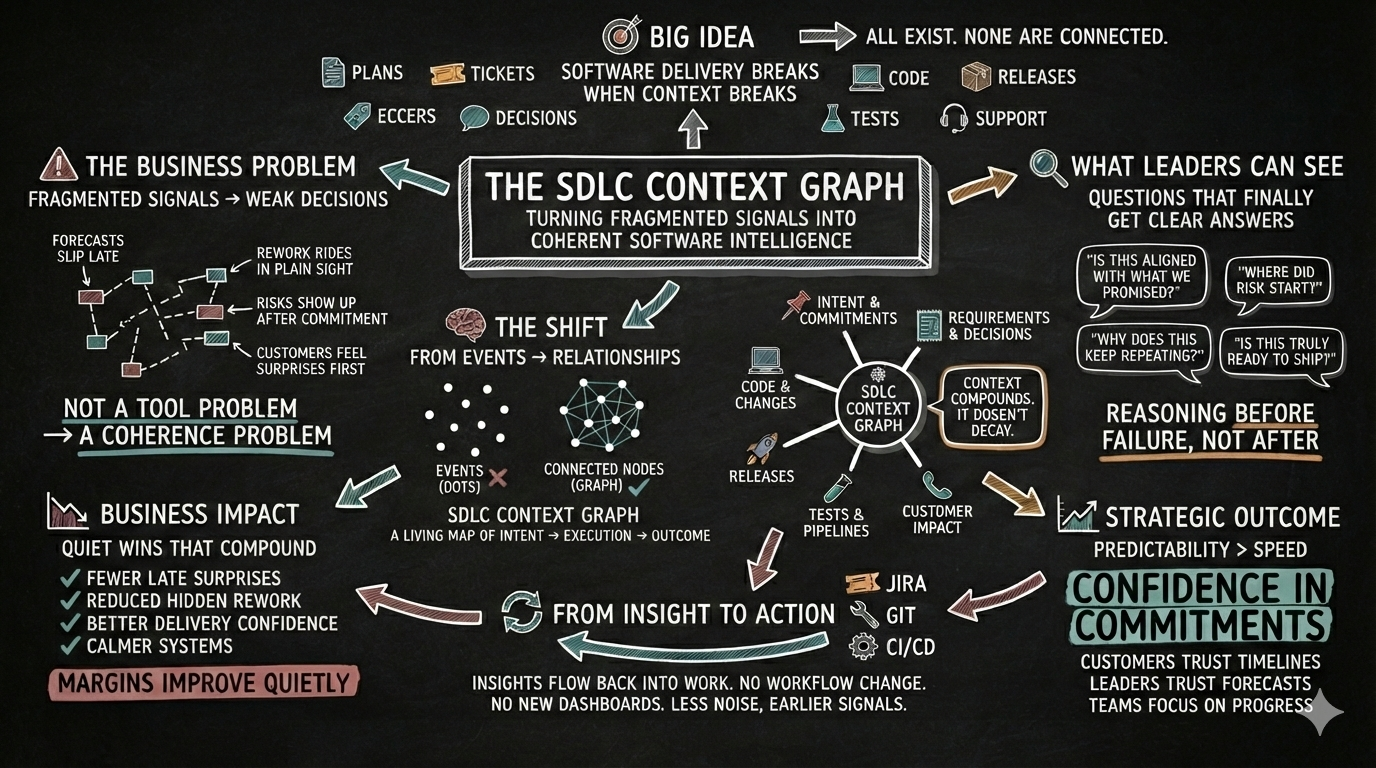
Software delivery rarely fails because teams lack tools. It fails because context is fragmented. Plans live in documents. Requirements live in tickets. Decisions live in chats. Code lives in repositories.
The SDLC Context Graph turns these fragmented signals into coherent software intelligence — a living model of intent, execution, and outcomes, with explicit relationships between them.
Why a Graph
Lists and dashboards summarize. Graphs preserve relationships. When a requirement changes, the graph knows which code, tests, and documents are affected — without anyone having to remember.
What Becomes Possible
- Trace any change from intent to release
- Detect drift between design and code
- Surface orphaned tests or undocumented features
- Ground AI agents in verifiable enterprise truth
The graph is not a destination. It's the substrate that makes everything else — governance, AI, traceability — work.